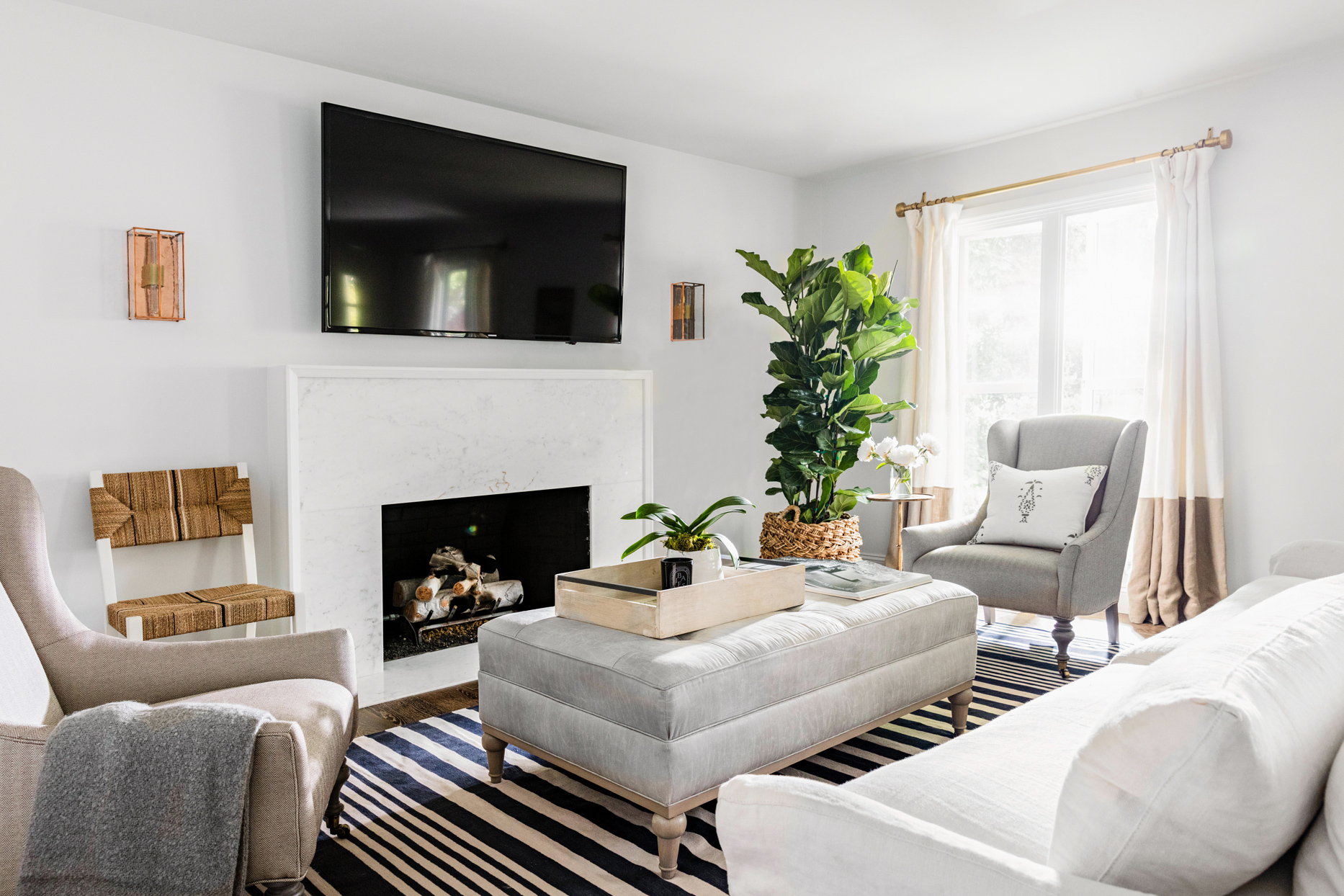
How to Arrange Furniture for a House Party: The Floor-Plan Method (No Guesswork)
If you have ever stood in the middle of a room, stared at the sofa, and thought “why does this feel hard already?”, this method is for you. A simple floor plan removes the guessing before you start dragging furniture across the rug.
Most readers come here with the same quiet concerns: How do I stop guests from bunching up in the doorway? Where should food and drinks go so the kitchen still works? How much seating is enough without making the room feel crowded? And how do I know whether a layout will work before I move anything heavy?
Charles Eames is often credited with saying, “The details are not the details. They make the design.” That fits party planning better than it may seem at first. A house party rarely feels awkward because the host forgot a decorative flourish. It feels awkward because the path to the drinks table is blocked, the chairs are too far apart to talk comfortably, or everyone has to cross the same narrow lane to do almost anything.
In this guide, you will learn a calm, repeatable floor-plan method: what to measure, how to draw zones, where to place your anchor pieces, how to protect a traffic path, and how to check comfort and flow before you buy, move, or borrow a single extra chair. If you want more broad hosting context, the site’s home page, About page, and Contact page can help you connect this layout work to the rest of your planning.

Terminology: The Few Layout Terms That Matter
Before we get practical, let’s define the terms I will use throughout the article. This keeps the planning simple and avoids the usual “I think we mean the same thing, but maybe not” problem.
- Floor plan: a quick sketch of the room from above, with walls, doors, fixed items, and movable furniture shown roughly to scale.
- Zone: an area with one main purpose, such as arrival, conversation, food and drinks, games, or a quiet corner.
- Traffic path: the main route guests use to move between important zones.
- Anchor piece: the largest furniture item that sets the room’s layout, usually the sofa, dining table, or a large pair of chairs.
- Landing surface: any table, counter, or shelf where a guest can reasonably place a drink, plate, bag, or phone.
- Dead-end path: a spot where someone has to stop, back up, or squeeze around another person because the route does not continue clearly.
The goal is not a perfect drawing. The goal is a room that tells guests what to do next without making them think too hard.
Why Furniture Layout Fails, and Why a Floor Plan Fixes It
Furniture layout usually fails for a very ordinary reason: people try to solve three problems at once in the real room. They are thinking about style, guest count, and movement while also lifting tables and second-guessing every choice. That is a tiring way to plan.
A floor plan changes the order of decisions. Instead of asking “Where should this chair go?” you ask better questions first:
- What needs to happen in this room?
- Which path must stay open all evening?
- What is too large, too fragile, or too unnecessary to keep in place?
- Where will guests naturally pause, gather, and set things down?
Once those answers are visible on paper, the furniture choices become easier. You stop arranging items for symmetry and start arranging them for use. That is the shift that makes a room feel welcoming instead of mildly chaotic.
I recommend treating the floor plan like a pre-party service check. It is quiet work, and that is exactly why it helps. By the time the guests arrive, the hard decisions are already behind you.
Step 1: Measure Once, Not Five Times
The measuring step does not need to be glamorous. It just needs to save you from obvious mistakes. A phone note, a tape measure, and ten patient minutes are enough.
Measure these items first:
- The room itself: overall length and width.
- Doorways and door swing: note which doors need full clearance and which can stay partly open.
- Windows and radiators: anything that limits where large pieces can sit.
- Fixed furniture: fireplaces, media consoles, built-ins, kitchen islands, and any piece you realistically will not move.
- Main walkways: the natural route from entry to seating, food, drinks, and bathroom.
- Useful surfaces and outlets: sideboards, counters, lamps, music speakers, and any place that may need power.
If the room opens into another room, measure the opening too. This matters more than many hosts expect, because that threshold often becomes the busiest part of the whole setup.
| What to Measure | Why It Matters | What Can Go Wrong If You Skip It |
|---|---|---|
| Door swing | Keeps entry and bathroom access usable | A chair or table blocks the door halfway through the evening |
| Main walkway | Protects guest flow between key zones | Everyone bottlenecks around one table or sofa arm |
| Fixed furniture | Stops you from sketching impossible layouts | The plan looks good on paper but cannot work in the room |
| Landing surfaces | Supports drinks, plates, and personal items | Guests balance cups on shelves or the floor |
| Outlets | Helps with lighting, music, or warming trays | Cords end up crossing the traffic path |
Good measurements do not make the room rigid. They make the plan honest.
Step 2: Create Zones Before You Place Furniture
Once you know the room’s limits, divide it into zones. This is the part most people skip, and it is the part that usually makes the biggest difference.
For a house party, five zones cover most needs:
- Arrival zone: where coats, bags, and the first greeting happen.
- Conversation zone: the main social seating or standing area.
- Food and drinks zone: a surface or cluster of surfaces for serving and refilling.
- Activity zone: a game table, dessert station, playlist corner, or another small focal point.
- Quiet zone: a calmer pair of seats or a side room for lower-energy conversation.
Not every party needs all five zones equally. A casual evening with snacks may only need arrival, conversation, and drinks. A birthday gathering may need a stronger activity or cake zone. The important part is that each area has one job. When a zone has too many jobs, the room starts fighting itself.
Draw the zones on your sketch with simple labels or colored blocks. At this stage, do not worry about exact chair placement. Think in footprints and purpose. A sofa may belong in the conversation zone, but the zone matters first.
If you want a broader checklist version of this same idea, see How to Arrange Furniture For A House Party. That article complements this one nicely, while this guide stays focused on the floor-plan method specifically.
Step 3: Choose One Traffic-Path Rule
Every good party layout has one movement rule. You do not need to say it out loud. You just need to design around it. My preferred rule is simple: guests should be able to move from the entry to the main seating area, then to food and drinks, and then toward the bathroom without doubling back through a crowded pinch point.
You can apply that rule in different ways:
- Loop path: guests circulate around furniture and naturally rejoin the room from another side.
- Spine path: one central walkway leads to each main zone.
- Split path: one path serves seating, another serves food and drinks, so those movements do not collide.
In smaller homes, the spine path is often easiest. In open-plan spaces, the loop path tends to feel more relaxed. The split path works well when the kitchen is active and you want to protect it from standing clusters.
What matters is consistency. If the path changes shape every few feet because of random furniture placement, guests begin creating their own routes. That usually means they stand where you least want them to stand: the doorway, the kitchen threshold, or the one corner where plates and coats are both trying to live.
Step 4: Place the Anchor Pieces First
Now it is time to bring furniture back into the sketch. Start with the biggest pieces, because they do most of the talking.
Your anchor pieces may include:
- The sofa in the main living room
- A pair of large lounge chairs
- The dining table
- A console or sideboard used for drinks
- A game table or dessert table if the event needs one
Place each anchor piece according to the zone and traffic rule you already chose. This is important. If you place the sofa first based only on where it “usually goes,” the rest of the plan becomes harder. But if you place it to support conversation while respecting the traffic path, the smaller decisions start taking care of themselves.
A few reliable rules help here:
- Do not let the sofa block the shortest route between two essential zones.
- Keep the serving table far enough from the main seating that a small queue will not trap seated guests.
- Avoid centering a large piece just because the room is symmetrical. Symmetry is pleasant, but flow matters more.
- If a large coffee table interrupts movement, replace it for the evening with two smaller side tables.
When the anchor pieces look right on paper, test the path again before adding anything else. This pause saves a surprising amount of trouble.
Step 5: Add Seating Without Losing Sightlines
Once the anchor pieces are placed, add secondary seating. This is where many layouts get too ambitious. More chairs do not automatically mean more comfort. Sometimes they just mean more obstacles.
Build seating in layers:
- Add the seats you know people will use first.
- Create one or two conversation clusters instead of one giant ring.
- Leave at least one bridge seat or easy edge where people can join casually.
- Hold back backup chairs until the room proves it can handle them.
Sightlines matter for the host too. If you are pouring drinks, greeting guests, and quietly checking whether the room still feels balanced, you need to be able to see across the main areas without tall furniture or awkward angles cutting the room into blind spots.
A good layout lets the host move and observe without looking like they are managing traffic control. The room should feel natural, even though it has been planned carefully.
Two examples make this clearer:
Example 1: Small living room, six to eight guests
Place the sofa against the long wall, angle one chair across from it, and move one small side chair near the open side of the grouping. Keep the coffee table only if people can still pass comfortably. Put drinks on a console behind the seating or in the dining space, not between the sofa and doorway. Result: one compact conversation zone, one visible path, no squeezed corner seating.
Example 2: Open-plan room, ten to twelve guests
Use the sofa and two chairs as the main conversation cluster, then create a second lighter cluster with two movable chairs near the edge of the room. Keep the dining table as the serving or dessert zone instead of trying to seat everyone there. Result: guests can drift between clusters instead of collecting in one dense pocket.
If your event is more specifically a birthday setup, the page on The Way to Organize Furniture To Your Birthday Party is a useful follow-on because it shifts the same planning logic toward cake, gifts, and focal-moment seating.
Step 6: Plan Surfaces for Food, Drinks, and Everyday Guest Behavior
A room works when guests always have a sensible place to put something down. This is one of the least glamorous parts of planning, and it is one of the most important.
Ask yourself where these items will live:
- Water and other drinks
- Plates, napkins, and serving utensils
- Shared snacks or appetizers
- Used glasses or empty bottles
- Phones, bags, and coats near the entry
Now check whether those surfaces interrupt the traffic path. If they do, move the surface, not the guests.

One helpful trick is to separate food and drinks when space is tight. People linger at drinks. They tend to pass through food more quickly. Splitting those uses often improves flow immediately.
If you prefer digital planning instead of sketching on paper, a simple web app generator can be a neutral, practical way to mock up boxes for sofa, chairs, and serving surfaces before you move anything heavy. It is not required. It is just a useful option if you think better on a screen.
Also remember that every visible surface invites behavior. If a narrow side table sits on the main path, someone will still try to place a drink there. If the only open counter is in the working part of the kitchen, guests will gather exactly where you still need access. Plan for normal human behavior, not idealized behavior.
Step 7: Run the Comfort, Safety, and Flow Checklist
Before you buy extra furniture, borrow folding chairs, or start moving the real room, run one last check. This is your low-drama moment to catch problems cheaply.
Use this checklist:
- Comfort: can seated guests talk without shouting across a large gap?
- Access: can someone reach food, drinks, and the bathroom without weaving through a trapped corner?
- Safety: are exits, door swings, and the main path clear of cords, unstable tables, or sharp corners?
- Landing surfaces: does every main zone have somewhere sensible to place a drink or plate?
- Host visibility: can you see the main social areas easily from the spots where you will spend time?
- Flexibility: can you remove one chair or add one chair without breaking the whole setup?
I like to do a “three-guest test” at this point. Imagine one guest arriving, one guest already seated, and one guest carrying a drink toward the conversation area. Walk that route physically if you can. If it already feels fiddly, the plan needs one more round of simplification.
When in doubt, remove one object before you add another. Empty space is often doing useful work.
Common Layout Mistakes to Avoid
Most room problems are not mysterious. They are familiar mistakes in slightly different clothing. Watch for these during the planning stage:
- Blocked exits: extra chairs or side tables creep toward doors because they look harmless there.
- Dead-end paths: a guest can walk into a spot but has to reverse awkwardly to get out.
- Overcrowded tables: the only generous surface becomes the default home for food, drinks, bags, and conversation all at once.
- Wall-only seating: every chair is pushed outward, which makes talking feel formal and disconnected.
- Kitchen takeover: drinks, ice, snacks, and host prep all happen in the same tiny work lane.
- No quiet edge: every part of the room serves the same energy level, so guests have nowhere to step aside briefly.
These mistakes are common because they are easy to create unintentionally. A floor plan makes them visible before they become exhausting in real time.
A Simple Floor-Plan Template You Can Reuse
If you want a repeatable method, copy this sequence into your notes app and reuse it for any gathering:
- Sketch the room outline.
- Mark doors, windows, outlets, and fixed furniture.
- Label the five zones you need.
- Choose one traffic-path rule: loop, spine, or split.
- Place anchor pieces first.
- Add only the seating you actually need.
- Assign surfaces for drinks, food, and personal items.
- Walk the path once before moving the real room.
That is the full method. It is calm on purpose. You do not need a decorating degree, a giant room, or a new set of furniture. You need a plan that respects how people actually move and gather.
Final Thought: Make the Room Easier on Purpose
A successful party layout does not call attention to itself. Guests simply arrive, settle in, find what they need, and move through the evening without friction. That result is not luck. It comes from deciding the plan before the heavy lifting begins.
If this happens, your next step is straightforward: measure once, sketch the room, set the zones, and test the path. If you want help thinking through guest flow more broadly, the site’s Support page is a good starting point, and the related party-layout guides on this site will give you a few more practical variations to borrow.
In short: floor plan first, furniture second, guests always. That order keeps the room kinder to everyone, including you.