How to Choose a Central Bed & Breakfast in Oristano (Beyond the Map Pin)
The map pin is the smallest part of the decision. If you are choosing a central B&B in Oristano, the real question is not whether the property sits near the middle of town. It is whether the location fits the way you will actually sleep, walk, arrive, and leave.
When guests search for a central stay, they usually have the same four questions in mind: How far will I walk? How loud will it be at night? Where do I park? And will the morning routine work for me, or will it politely sabotage my day? That is the practical version of “central.” It is also the version that prevents regret.
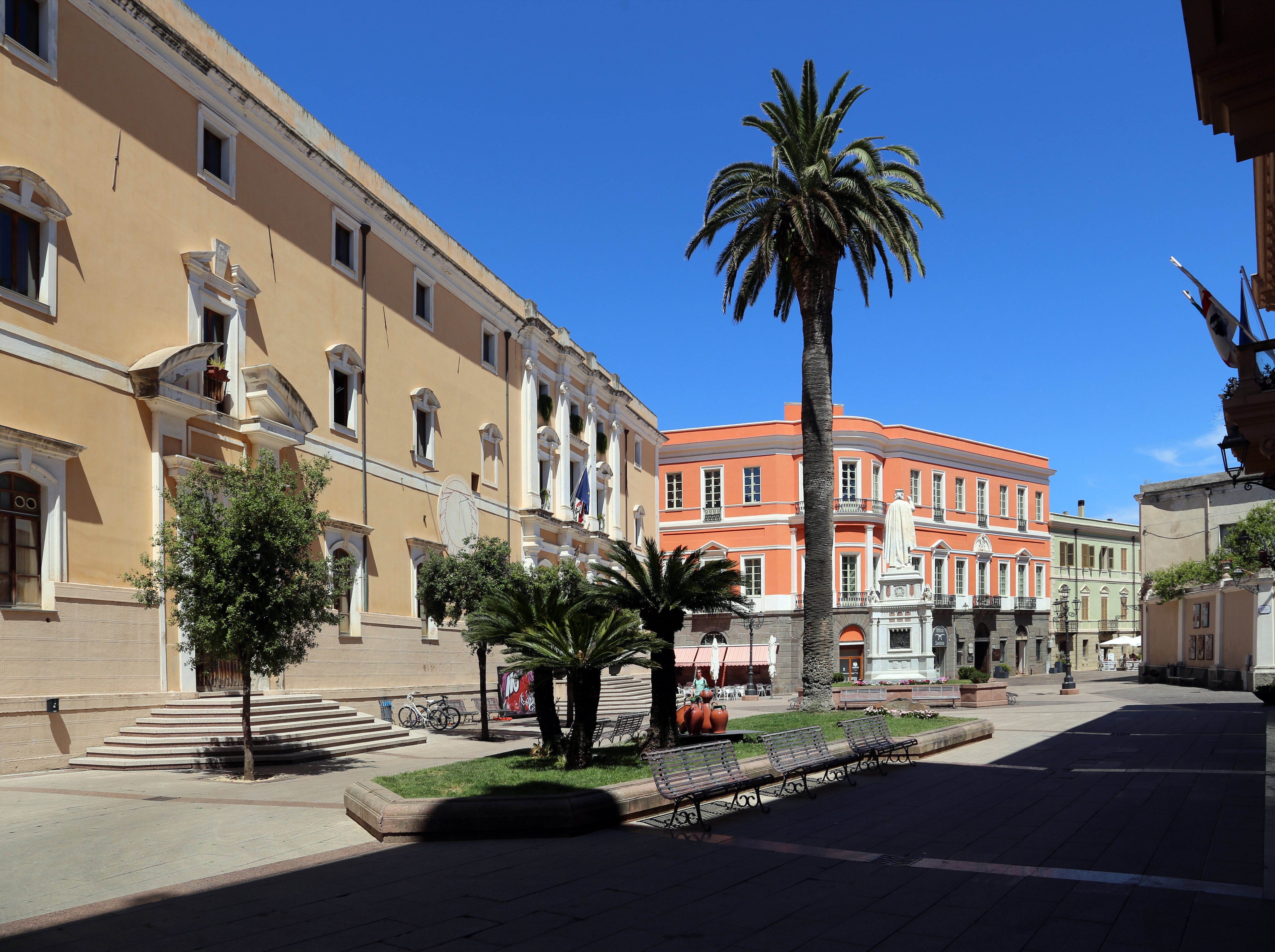
Oristano gives you a clear anchor point in Piazza Eleonora, but a good stay is not judged by the square alone. You still have to look at the route to dinner, the noise pattern outside the windows, the parking plan, and the stairs between the street and the room. The official Comune di Oristano page for Piazza Eleonora and the Sardegna Turismo overview of Oristano are useful starting points, but the final decision belongs to the details.
What you will get here: a clean way to define “central,” a walkability audit for a 5 to 10 minute radius, a noise and light check, a parking reality check, a room-orientation checklist, a simple 10-minute scorecard, and a set of questions to send the host before you confirm.

Terminology: what these location words really mean
Travel listings use a few words so often that they start to feel precise. They are not. Before you compare options, define the terms in plain language.
| Term | Plain meaning | What to watch for |
|---|---|---|
| Central | Close to the places you will use most. | Central for walking may not be central for driving. |
| Walkability | How easy it is to reach meals, sights, and services on foot. | Distance alone is not enough. Route quality matters too. The general concept is use-based, not map-based, which is why walkability guides focus on access and route conditions rather than a single dot. |
| Street-facing room | A room whose windows face the street or square. | Usually more light and more sound. |
| Courtyard-facing room | A room that faces an inner side or quieter rear area. | Often calmer, sometimes with less view. |
| Load-in | The practical part of unloading luggage and entering the property. | If you arrive tired or late, this matters more than almost anything else. |
| Quiet hours | The period when the property or neighborhood is expected to be calmer. | Useful if you sleep lightly or plan early starts. |
| Buffer | Extra time or distance that absorbs delays, noise, or weather. | A small buffer can make the stay feel much more relaxed. |
I use these definitions because they force the decision to become concrete. “Central” stops being a marketing adjective and becomes a set of tradeoffs. That is much easier to manage. It is also much harder to romanticize, which is usually an advantage.
Why “central” can mean different things
In Oristano, a central B&B can serve very different travel styles. One guest wants to step out and reach dinner without thinking. Another wants easy parking and a straightforward departure in the morning. A third wants the historic center, but only if the room still sleeps like a quiet room. All three can be right.
The mistake is treating centrality as one universal feature. It is not. A location can be central and noisy, central and inconvenient for cars, central and perfect for walking, or central and awkward if you have mobility needs. You are not looking for a universally best location. You are looking for the best fit for your trip.
That is why I start with a simple decision rule: choose the place that reduces the most friction for the most important part of your stay. If your itinerary is built around walking and evening meals, prioritize route quality. If you arrive by car and leave early, prioritize parking and easy entry. If you sleep lightly, prioritize room orientation. The word “central” should serve those priorities, not replace them.
For a quick orienting reference, the Sardegna Turismo walk through the heart of Oristano is useful because it shows how the historic center hangs together around the square. That is the level of context you want before you start comparing individual properties.
A practical way to think about centrality
- Central for walking: you can reach the places you will actually use without planning transport.
- Central for sleep: you are close enough to stay convenient, but not so close to nightlife or traffic that the room becomes a sound relay.
- Central for driving: you can arrive, unload, park, and leave without turning the trip into a logistics exercise.
- Central for routine: breakfast, check-in, and late returns all fit your schedule rather than fighting it.
That final category is the one many people forget. A location is only useful if it supports the way you actually move through the day. The best properties do not ask you to become a more patient person to enjoy them.
Walkability audit: what to check within a 5 to 10 minute radius
Map listings compress reality. A 400 meter walk can feel delightful or annoying depending on crossings, pavement, shade, and whether you are carrying something you will regret later. So I use time instead of distance. Five minutes, ten minutes, and fifteen minutes each tell a different story.
Start by checking what sits within an easy 5 to 10 minute walk from the property. Not just one landmark. Look at the actual set of places you may use more than once: a café, a dinner spot, a pharmacy, a convenience stop, a square, a museum, and the route back after dark. If those pieces line up, the location earns its central label.
One helpful mental model comes from walkability resources, which treat a place as a network of access and route quality rather than a single point. That is exactly the right lens here. The pin is where the building sits. The walk is where the trip happens.
What to test in the radius
- Meals: Can you reach breakfast, lunch, or dinner options without transportation?
- Daily errands: Is there a pharmacy, ATM, or small shop nearby if you need one?
- Orientation: Can you find your way back without confusion after the first day?
- Evening return: Does the route still feel simple after dinner, when you are tired?
- Weather fallback: Is there a sheltered or shaded alternative if the day is hot or wet?
Simple route questions
Ask yourself the same question three times: Is this route easy in daylight? Is it easy in the evening? Is it still easy when I am carrying a bag, a coat, or a small amount of patience? If the answer changes, the location may be central in theory but not in practice.
For visitors who want to start with the city center itself, the official Piazza Eleonora page from the Comune di Oristano is a helpful anchor. It will not tell you how your exact B&B feels, but it does help you ground the walkability discussion in a real central point.
Walkability red flags
- Several turns before you even reach the main square.
- Crossings that feel awkward with luggage.
- Long stretches with little shade if you are visiting in warm weather.
- A route that looks short on a map but feels indirect on foot.
If you find yourself needing to explain the route in a sentence longer than the route itself, that is usually a sign. Central should be easy to use, not easy to defend in writing.
Noise and light considerations
Central locations are convenient because people use them. That usually means more activity, more movement, and more light. It can also mean more noise. The correct question is not “Is there noise?” There will always be some kind of noise. The question is whether the room’s noise pattern fits the kind of sleep you want.
Look at three things. First, the street outside. Second, the room’s facing direction. Third, the likely evening rhythm around the property. A room above a quiet lane behaves very differently from one that faces a square with late coffee or restaurant traffic. Even a beautiful window can be a problem if it delivers the world a little too directly.
If you are sensitive to light, ask whether the room has blackout curtains, shutters, or heavier drapes. A central room that gets strong morning light can be perfect for early risers and mildly aggressive for everyone else. I like daylight. I also like choosing when it arrives.
Questions to ask about sound
- Is the room street-facing or interior-facing?
- Are there double windows, shutters, or sound-reducing features?
- What is the noise level like on weekends?
- Do nearby cafés or streets stay active late?
- Which room type is quietest if I need a lighter sleep environment?
Questions to ask about light
- Does morning light enter early?
- Are there blackout curtains or shutters?
- Is the room brighter because it faces the square?
- Will the window exposure affect naps or a late morning?
If you want a broader travel-planning resource on how guests and hosts handle accessibility, sleep, and practical arrival needs, the ADA National Network is a solid reference point for thinking about barriers before you arrive. Different trip, same principle: ask about the environment before the environment asks about you.
Two simple examples
Example one: a couple planning dinners in town might accept a little street activity because they will be out late anyway. For them, the benefit is location, not silence.
Example two: a guest on a restorative break may care less about the last restaurant on the corner and more about sleeping without interruption. For that guest, a slightly less exposed room is usually the better value.
Neither choice is more sophisticated. They are just different uses of the same place. Good decisions respect that.
Arrival and parking reality check
If you arrive by car, parking is not a side note. It is the first chapter of your stay. A central B&B can be excellent for walking and still be annoying for unloading if you do not know where to stop, where to leave the car, and how long the walk from the parking spot actually is.
Ask the property exactly where guests unload luggage. Ask whether parking is on-site, nearby, paid, free, or limited. Ask whether you should reserve a spot in advance. And ask what happens if you arrive later than planned. These are normal questions. They do not make you difficult. They make the trip easier.
Parking is also the place where “close enough” stops being a helpful concept. A spot that is technically near the property but awkward to reach at check-in time is not truly convenient. If you will be arriving in the evening, after a meal, or after a long drive, the path from the car to the door matters more than the address line.
For broader local context, the Comune di Oristano’s parking information page is useful background. It will not replace the host’s specific instructions, but it helps you understand the parking question as a city-level issue rather than just a property-level surprise.
Parking questions that deserve a clear answer
- Where exactly do I stop to unload?
- Is the parking included with the stay?
- If not, how far is the nearest practical option?
- Does the parking require a permit, ticket, or payment app?
- How late can I arrive and still make the process simple?
If the answer to all five is vague, you do not have a parking plan. You have a hope. Hope is useful in many parts of life. It is weaker in a city center with luggage.
Morning routine fit
Breakfast timing can quietly decide whether a location feels smooth or slightly off. A central stay is at its best when it fits the rhythm of your day. If breakfast starts exactly when you want to be leaving, that is a mismatch. If it starts a bit earlier than you need, that is usually a benefit.
Ask when breakfast begins, whether there is any flexibility, and whether an early departure can be handled cleanly. Some guests are happy to start slow. Others need coffee, a quick meal, and the door within a narrow window. Neither is wrong. The room just has to match the pattern.
Shared spaces matter here too. A property with a calm breakfast room can make the stay feel organized and humane. A crowded layout can make even a good location feel rushed. The same logic applies to hallways, entry areas, and any common room where guests cross paths before the day begins.
Morning fit checklist
- What time does breakfast start?
- Can I get coffee or a lighter option earlier?
- What if I leave before breakfast hours?
- Is breakfast served in a separate room or a shared space?
- Will the layout support a calm, easy departure?
If your morning routine is simple, central location can help a lot. You can step out for an early walk, return for breakfast, and still keep the rest of the day flexible. That is the nice version of being well placed. The less nice version is spending the morning working around the room’s schedule rather than your own.
If you want to think in terms of flow rather than labels, the same practical habit shows up in a room-by-room layout checklist for a house party: movement patterns matter more than decorative intentions. Different setting, same law.
Room orientation and views
Room orientation is one of the easiest details to overlook and one of the easiest ways to improve your stay. A street-facing room may give you a stronger sense of place and a better view. A courtyard-facing room may give you quieter sleep. A higher floor may improve both. A lower floor may be more convenient. Decide which tradeoff matters more to you.
Views are nice, but privacy is usually more valuable. Ask whether the room looks onto the square, the street, a courtyard, or another building. Then ask whether people can see in easily from outside. A view that requires you to choose between light and privacy is not automatically a good thing.
I also like to ask about window access, shutters, and ventilation. A central room should feel comfortable throughout the day. If the room gets hot, bright, or exposed in a way that forces you to keep the curtains closed, the “view” starts behaving like a compromise.
Questions for the host about room placement
- Can I request a street-facing or courtyard-facing room?
- Which room type is quieter at night?
- Which room gets the best balance of light and privacy?
- Are there balconies, shutters, or windows that open easily?
- Will the room suit a longer stay, or only a short overnight?
The right answer depends on your priorities. If you are out all day and use the room mostly for sleep, quiet may win. If you care about atmosphere and local feel, the view may be worth a little more activity. Neither choice is dramatic. It is just a decision with consequences, which is most decisions, really.
Accessibility and mobility needs
Accessibility is not a niche issue. It is part of fit. If you have mobility needs, if you travel with a stroller, if you carry heavy luggage, or if stairs are simply a poor way to begin a holiday, ask about the building before you book. Old-town charm and convenient access are not always the same feature.
Ask whether there is an elevator, how many stairs there are, whether there is a ground-floor room, and whether staff can help with bags. Also ask about sidewalk conditions and the route from parking to entrance. A short walk on paper can still include steps, uneven pavement, or a turn that is more annoying than expected.
This is one area where the ADA National Network is a useful general reference. The ADA National Network does not describe Oristano specifically, of course, but it is a solid reminder that access questions should be asked before arrival, not after the room assignment has already happened.
Accessibility questions to send before booking
- Is there an elevator?
- How many stairs lead to the room?
- Is there a ground-floor option?
- Can I unload luggage near the entrance?
- Are sidewalks and route surfaces easy to manage with bags?
- Is the route from parking to the property step-free?
If the property answers clearly, good. Clarity is a form of hospitality. If the property answers vaguely, that tells you something too. I would rather learn the truth before arrival than negotiate with it while carrying a suitcase up a staircase in the heat.
A simple scoring checklist you can use in 10 minutes
Here is the fast version. Give each category a score from 0 to 2. You do not need a spreadsheet, but if you enjoy one, this is the part where it becomes justified.
| Category | 0 | 1 | 2 |
|---|---|---|---|
| Walkability | Trips require planning | Mixed convenience | Easy on foot |
| Noise and light | Likely disruptive | Acceptable with tradeoffs | Matches your sleep needs |
| Parking and arrival | Unclear or awkward | Works with effort | Simple and predictable |
| Morning routine | Breakfast or layout conflicts with your schedule | Mostly workable | Fits your start time |
| Room orientation | Poor balance of noise, light, and privacy | Acceptable tradeoff | Strong fit |
| Accessibility and stairs | Friction is high | Manageable | Comfortable |
| Weather and evening return | Route feels exposed or clumsy | Fine with a buffer | Easy in different conditions |
Scoring guide: 12 to 14 points means the location is likely a strong match. 8 to 11 points means the stay is usable, but you should know the tradeoffs. 0 to 7 points means the location probably works only if price, dates, or a specific feature outweigh the friction.
The point of the score is not to turn travel into accounting. It is to stop a single attractive feature from drowning out the rest of the evidence. A beautiful square is nice. A beautiful square plus the wrong room orientation is still the wrong room orientation.
A two-minute version of the test
- Write the property name.
- Score the seven categories above.
- Mark the lowest two scores.
- Ask the host one follow-up question for each low score.
- Only book when the answers make the low scores acceptable.
That is enough structure to keep you honest. It also keeps the decision fast, which matters when you are comparing more than one property and do not want the process to become a tiny administrative burden.
Questions to send the host before confirming your reservation
Use the same question set for every property. If you ask the same things in the same order, comparison becomes much easier. I would send something like this before booking:
- How far is the property from Piazza Eleonora on foot, and what is the route like?
- Is the room street-facing or courtyard-facing?
- How much noise should I expect at night?
- Where should I park or unload luggage?
- Is parking included or separate?
- What time is breakfast served?
- Can I leave earlier if needed?
- How many stairs are there, and is there an elevator?
- Can you suggest the quietest room type if I sleep lightly?
- Is there a simpler route back at night or in bad weather?
If the host answers clearly, that is usually a good sign. Clear answers suggest the property understands how guests actually use the space. That matters more than polished adjectives ever will.
If you want to keep the comparison process tidy, the same logic works in any planning task. A room behaves better when the path is clear; a trip behaves better when the key questions are answered. The habit scales.
Bottom line
Choosing a central B&B in Oristano is not about finding the property closest to a pin on a map. It is about choosing the place that fits your walking pattern, your sleep needs, your parking reality, your morning routine, and your tolerance for stairs or street activity. That is the real decision.
If you want the shortest possible rule: choose the property that makes your most important daily movement feel effortless. For some travelers that means a short walk to Piazza Eleonora. For others it means a calmer room, easier parking, or a simpler arrival. The right answer depends on what you need the stay to do.
If you are still comparing, start at the home page for site orientation, use the About page for background, and keep the contact page handy for direct questions. For property-specific details, check the Eleonora Bed and Breakfast page. And if you like thinking in terms of flow rather than labels, the house-party layout checklist shows the same principle in another setting: the right space is the one that moves well.
Key points: define “central” by your own trip, not by marketing copy; check walkability within a real 5 to 10 minute radius; ask about noise, light, parking, breakfast, stairs, and room orientation; and use a simple scorecard before you book. That will usually get you closer to the right answer than the map pin ever will.