How to Create a Room That Works for Parties (Without Losing Comfort)
A room that tries to be everything at once usually becomes bad at all of it. The fix is not more furniture. The fix is deciding what the room must do in quiet mode, what it must do in party mode, and what gets to stay on the floor when those two realities collide.
Readers usually arrive here with the same questions:
- How do I make a bedroom useful for a small gathering without making it feel crowded?
- What furniture should stay, what should move, and what should stay folded until guests arrive?
- How do I keep a clear path through the room once people start standing, sitting, and dropping bags everywhere?
- How do I reset the room fast so it still works for sleep the same night or the next morning?
The actual problem is not style. It is conflict between uses. Sleep wants darkness, calm, and fewer obstacles. Hosting wants surfaces, seats, light, and movement. If you ignore that conflict, the room punishes you later. That is why the boring basics matter: a comfortable sleep setup, including temperature and light control, still decides whether the room works once the party is over, as the Sleep Foundation explains in its guidance on sleep-friendly room conditions. Lighting choices matter too, because party mode usually adds brightness while quiet mode needs softer layers and less glare; the U.S. Department of Energy has a useful overview of practical lighting options for everyday rooms.
If you read to the end, you will have a simple layout rule, a seating plan that does not wreck circulation, a storage checklist for the last ten frantic minutes before people arrive, and a reset routine that gets the room back to “someone can sleep here” without theatrical suffering. If you want more hospitality-focused context before you start, the main home page, the site about page, and the dedicated Eleonora Bed and Breakfast page all point to the same basic standard: comfort is supposed to survive real use.
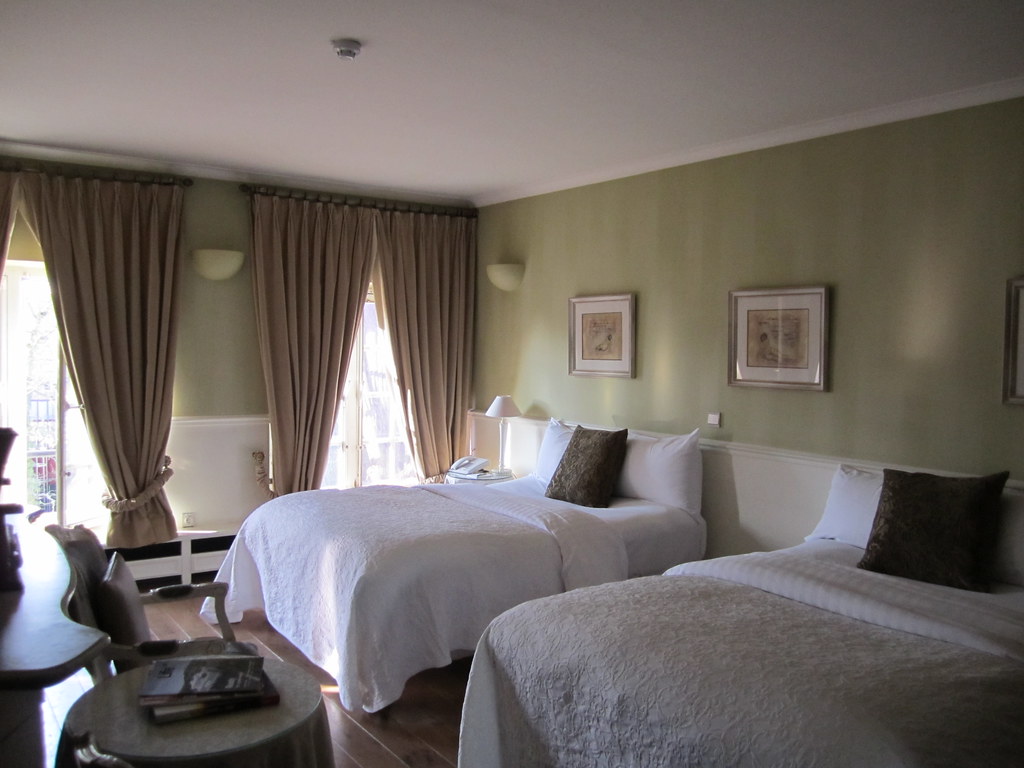
The Two-Mode Rule: Quiet Mode First, Party Mode Second
I prefer a two-mode rule because it forces honesty. The room has a primary job and a temporary job. Quiet mode is the default state for sleep, reading, unpacking, and ordinary daily use. Party mode is the temporary state for conversation, drinks, snacks, and overflow guests. If you plan only for the event, the room becomes awkward the other 95 percent of the time. If you plan only for sleep, the room turns into dead square footage the moment you need it to help with hosting.
Start by writing down what each mode requires.
| Mode | Must Have | Can Be Temporary |
|---|---|---|
| Quiet mode | Bed access, bedside light, phone charging spot, place for a bag, clear path to exit | Extra chair, tray table, party lighting, extra cushions |
| Party mode | Open walkway, 3 to 6 casual seats, drink-safe surface, bag drop zone, warmer light | Foldout table, spare stools, ice bucket stand, blanket basket |
This table matters because it prevents a common false lead: people keep buying “versatile” furniture before they have defined the actual job. Rule that out first. A room becomes flexible when you know which pieces stay fixed and which pieces earn their keep only on hosting nights.
Pick One Focal Point and Build Around It
Every useful room needs an anchor. In a guest room, that is usually one of three things: the bed wall, the window, or the seating side of the room. Choose one. Do not let the room argue with itself.
If the bed is the visual anchor, keep it clean, centered if the room allows, and easy to approach from at least one side. That gives you a calm default setup, then lets the party arrangement orbit around it. If the window is the anchor, use the natural light side for chairs and a small table, and keep the bed secondary. If a seating wall already exists because the room is long or oddly shaped, treat the bed as background and make the social zone the first thing the eye reads.
The test is simple: stand in the doorway and look in. If your eye jumps from bed to desk to random storage basket to extra lamp to folding chair, the room is performing confusion. A party-ready room still needs visual hierarchy. Pick the dominant feature, then demote everything else.
For smaller rooms, the bed usually wins by default. Fine. In that case, build the social zone with restraint: one chair can live in a corner, another can move in temporarily, and a small round or nesting table can appear only when needed. An ottoman is useful here because it can function as a seat, a footrest, or a soft landing spot without making the room look packed.
Plan the Walkways Before You Add More Seats
The real symptom of a bad party room is not ugliness. It is traffic failure. People should be able to enter, find a place to stand or sit, and leave again without brushing the bed, clipping a lamp, or stepping over bags. If the path is broken, the room feels smaller than it is.
Mark two routes:
- Entry to seat: the path from the door to the first obvious place to sit or pause.
- Seat to exit: the path people use when they need the bathroom, the hall, or another room.
Those two paths should stay clear even after jackets, handbags, or one overly confident guest decides to colonize a corner. That means no baskets jutting into the route, no foldout table in the narrowest point of the room, and no cute bench that quietly becomes a shin-level hazard after dark.
A good rule is to test the room in motion, not in still photos. Walk in while carrying a tray. Turn toward the chair. Step back out without twisting sideways. Then do the same with the overhead lights dimmed. If the route feels annoying when the room is empty, it will feel stupid when people are inside it.
Create a Seating Zone with Fewer Pieces Than You Think
Most rooms for small gatherings do not need a full “lounge.” They need one readable seating cluster. That usually means two chairs and one small shared surface, or one chair plus the edge of the bed dressed intentionally with a throw and a tray nearby. More pieces usually create more noise, not more comfort.
A practical seating setup looks like this:
- One chair that always belongs in the room.
- One second chair, stool, or compact accent seat that can move in only for hosting.
- One small table, tray stand, or nesting surface between or beside them.
- One soft backup seat such as a floor cushion or ottoman for overflow, not as the main plan.
The boring thing to check first is whether each seat has a reason to exist. A chair with no surface nearby becomes a coat rack. A stool with no back becomes temporary clutter after twenty minutes. A cushion without a nearby wall or bed edge becomes a regret. Seating should support conversation, not just fill corners.
If the room is used by overnight guests regularly, be careful with the bed itself. It can serve as overflow seating, but only if it still looks intentional. Straighten the cover, add two supportive pillows at the headboard, and keep food off it. Nobody wants to sleep in a bed that smells faintly of crackers and bad decisions.
Use Temporary Surfaces Like Tools, Not Permanent Furniture
Party mode needs somewhere to put glasses, a plate, or a phone. Quiet mode does not need three extra tables cluttering the room year-round. This is where temporary surfaces earn their keep.
Useful options include:
- Tray tables that fold flat and live in a closet.
- Nesting tables that separate only when guests arrive.
- A sturdy serving tray placed on a bench or dresser.
- A small folding table for drinks or dessert if the room is doing overflow duty.
The rule is simple: surfaces should appear near the seating zone, never inside the main walkway. Side tables beside the bed can help if they are wide enough for both a lamp and one guest item. If not, do not pretend. Bring in a separate tray stand and remove it later.
This is also where dressers and desks can work harder. A desk along the window wall can become a low-key beverage station for glasses and napkins. A dresser top can hold a lamp, tissue box, and one small tray for keys or jewelry in quiet mode, then become a landing zone for serving pieces in party mode. The trick is not doing both jobs badly at once.
Lighting and Sound: Make the Room Feel Welcoming at Night
Bad room lighting is an old scam. One harsh ceiling fixture pretends to solve the problem, then makes everyone look tired and the room feel smaller. Party mode works better with layers: one overhead or central source if you need it, one lamp near the seating area, and one bedside lamp that can stay on low or turn off once the room shifts back to sleep mode.
Warm bulbs are usually kinder than cold white light in a room that needs to feel social at night. If you use dimmable bulbs, even better. The Department of Energy’s guidance on bulb types is useful if you are choosing fixtures or trying to reduce heat and energy waste from older lamps. None of this has to become a design sermon. The room just needs light where people use it and less glare where they do not.
Sound deserves the same restraint. If the room is part of a bigger gathering, it does not need to compete with the entire house. A small speaker at moderate volume beats one loud source shoved on a dresser so close to the bed that every bass note rattles the lampshade. The goal is conversation support, not nightclub delusion.
Build a Storage Checklist for the Twenty Minutes Before Guests Arrive
Storage is where many “comfortable” rooms fall apart. They are comfortable only when they are empty. The minute real life appears, the chair collects laundry, the tabletop fills with cables, and the floor becomes a museum of things you meant to deal with later.
Create a fast storage plan before the room is under pressure.
- Closet: one empty section with matching hangers or hooks for last-minute coat storage.
- Under-bed space: a shallow bin for extra cushions, throws, or fold-flat trays.
- Dresser drawer or lidded box: chargers, remotes, paper clutter, and the other objects that breed on flat surfaces.
- Bag zone: one basket, bench, or designated corner where guests can drop purses or small totes without blocking the route.
- Linen fallback: one place for the extra pillow or blanket that gets moved during party mode.
If you need inspiration for the general discipline of keeping a guest space usable rather than overfilled, browse the broader planning notes on the blog and use the contact page if you are sorting out comfort questions for a small hospitality setup. The site’s recurring lesson is not glamorous: rooms work better when every loose object is assigned a home before guests teach you the consequences.
The 15-Minute Reset After the Party
Reset matters because temporary use should not poison the next use. Once the gathering is over, do not improvise. Run the same short routine every time.
- Clear the surfaces. Remove glasses, plates, and bottles first. Do not start by fluffing pillows while a ring of condensation is forming on the bedside table.
- Return the fixed furniture. Put the permanent chair back where it lives. Fold and store the temporary table or tray stand.
- Reclaim the walkway. Bags, shoes, extension cords, and stray cushions go out of the path immediately.
- Reset the bed. Straighten the cover, replace sleep pillows, and remove any decorative extras you only used to support casual seating.
- Switch the lighting back. Turn off the bright central light, leave a bedside lamp or one warm lamp on, and let the room look calm again.
- Do a smell check. Open the window if possible, remove food traces, and deal with anything stale before it settles into the fabric.
- Restock essentials. Water glass, tissues, charging cable, and one open surface by the bed. Quiet mode restored.
That routine should take about fifteen minutes because most of the work was already done earlier when you limited the number of movable pieces. If reset takes forty minutes, the room is carrying too many objects or asking too many pieces to do jobs they are bad at.
Three Room Types and the Best Fix for Each
Not every room fails in the same way, so the correction should match the shape of the problem.
- Narrow rectangular room: Keep the bed on the long wall if possible, put one chair near the window, and use a slim movable table. Do not split the room with a wide bench at the foot of the bed unless there is still a clean pass-through.
- Square room: Let one corner become the social zone with two compact seats angled toward each other. Square rooms tempt people to center everything. Resist that unless the room is genuinely large.
- Room with an alcove or window nook: Put the temporary gathering zone there and leave the sleeping zone alone. Alcoves are useful because they keep conversation from spilling into the main route across the room.
In each version, the logic stays the same. The room needs a visible “yes, sit here” area and a separate “yes, sleep here” area, even if the separation is subtle. You do not need a divider screen, a dramatic redesign, or some suspiciously expensive multifunction miracle. You need clear intent. Guests read rooms fast. If the room tells them where to put a bag, where to sit, and where not to block the exit, most of the work is already done.
Common Mistakes That Make the Room Feel Worse Than It Is
Most layout failures are predictable. That is good news. Predictable problems can be prevented.
- Overcrowding the perimeter. People line the walls with extra chairs and think they created capacity. Usually they just created a waiting room.
- Blocking outlets. If a guest or overnight visitor cannot reach power without crawling behind furniture, the setup is not clever. It is unfinished.
- No place for bags. If bags have no home, they migrate directly into the path of movement.
- Using the bed as a storage platform. That saves nothing. It just pushes clutter onto the one object that needs to stay calm and clean.
- One giant light source. Overhead glare makes the room feel flatter and less comfortable than it is.
- Permanent party setup. If the room looks like it is always braced for an event, everyday comfort quietly dies.
What Actually Works
A room that works for parties without losing comfort is usually modest, not elaborate. It has one anchor, one clear route, one readable seating zone, and only a few temporary pieces that appear when needed and disappear after. That is the actual mechanism. Everything else is decoration around it.
If you are stuck, do the first diagnostic step before buying anything: stand in the doorway, walk the route from entry to seat to exit, and note every object that slows you down. That list is the real starting point, not another shopping cart.