How to Host a House Party That Feels Comfortable: Ventilation, Cleaning, and Guest Flow Tips for 2026
How to Host a House Party That Feels Comfortable: Ventilation, Cleaning, and Guest Flow Tips for 2026
The best house parties feel easy because the room is doing some of the work for you. Before the first guest arrives, the real job is not “decorate everything.” It is simpler: make the space comfortable, keep people moving without crowding, and set up a cleanup routine that does not eat your next morning.
This guide follows a practical hosting workflow: choose the right rooms, keep the air fresh, clean the surfaces people actually touch, and shape the flow so guests can settle in without the classic bottleneck near the snack table. For a useful baseline on indoor comfort, the EPA’s guidance on home ventilation and indoor air quality is a solid reminder that comfort starts before the music does.
There is also a calm, common-sense cleanup standard worth following: after guests leave, the CDC recommends cleaning high-touch surfaces as part of a regular home routine. No drama, no panic, no chemical Olympics. Just the right amount of cleanup in the right places.

Start with the space: choose rooms, seating, and traffic flow
Good hosting starts with a floor plan, not a shopping spree. Decide which rooms are part of the party and which ones should stay quiet or off-limits. If the living room and dining area can work together, let them. If one area tends to clog up, make it a pass-through instead of the main gathering point.
A simple room plan should do three things:
- Give people places to sit, stand, and set down a drink.
- Keep hallways, doorways, and the bathroom path clear.
- Stop everyone from clustering around the same tiny patch of floor.
If you want a more detailed layout method, see our guide to arranging furniture for a house party. The goal is boring in the best way: make movement obvious.
Use current indoor-air basics: fresh air, fans, and ventilation
Comfort is partly visible and partly invisible. Stuffy air makes even a nicely arranged room feel heavier than it should. The EPA’s current guidance points to a practical trio for indoor air quality: source control, ventilation, and filtration. For hosting, that translates into three easy moves-reduce unnecessary odors, bring in fresh outdoor air when you can, and keep air moving with fans or HVAC settings.
Practical steps before guests arrive:
- Open windows early enough to freshen the room without making it chilly.
- Use a fan to move air across the room or out of a window if that setup works.
- Keep cooking smells from taking over the main conversation area.
- Check the temperature before anyone starts saying, “It’s a little warm in here,” which is party code for “please fix this now.”
If you want the official background, the EPA’s page on protecting indoor air quality at home explains why poor ventilation makes indoor spaces feel more crowded and less comfortable than they actually are.
Clean high-touch surfaces before and after the party
There is no prize for over-cleaning. For a normal gathering, focus on the places people actually touch: doorknobs, light switches, counters, remote controls, table edges, bathroom taps, and sink handles. Clean them before guests arrive if that helps you feel settled, then do a quick reset afterward.
| Before guests arrive | After guests leave |
|---|---|
| Wipe bathroom sinks, taps, and counters | Clear cups, plates, and napkins first |
| Clean kitchen counters and the serving area | Wipe the same high-touch spots again |
| Check soap, towels, and trash bins | Wash what needs washing and recycle what can be recycled |
The CDC’s guidance keeps the routine grounded: clean the spots that get touched, and save heavier disinfecting for situations where it is actually needed.
Set up food and drink stations to reduce crowding
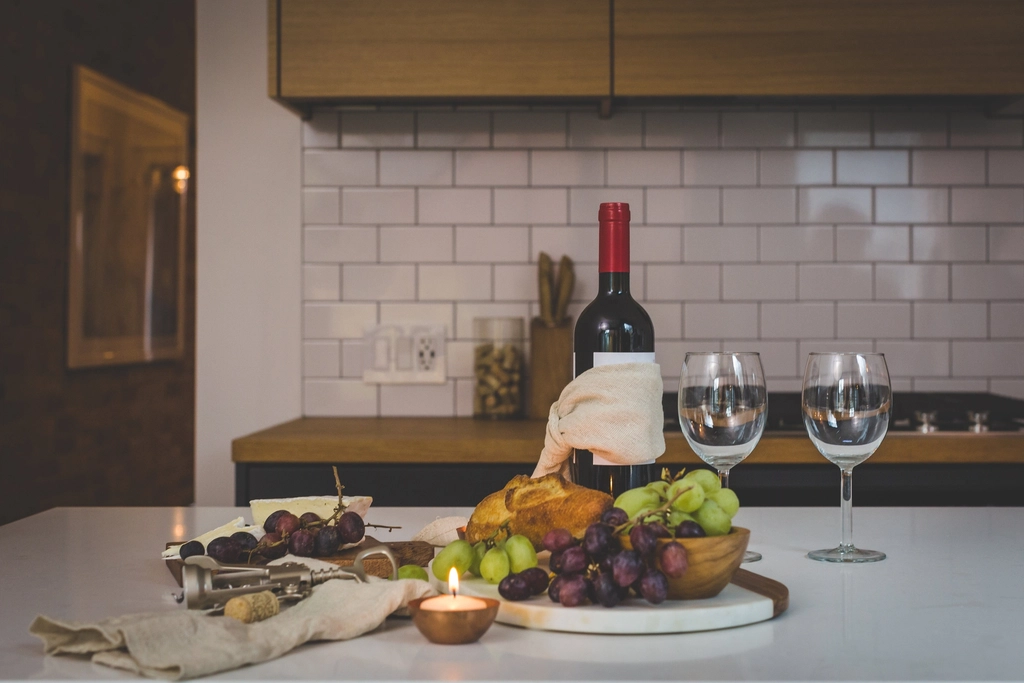
A party gets smoother when guests can serve themselves without forming a line in the worst possible location. One well-placed drink station and one simple snack area usually beat several competing tables. The aim is to remove friction, not stage a buffet competition.
A clean setup usually looks like this:
- Put drinks near a natural stopping point, not in the narrowest part of the room.
- Keep napkins, cups, and ice in one obvious place.
- Separate hot food from cold snacks if both are out.
- Leave enough table edge for people to set things down without balancing them like a tray test.
If you want a companion layout example, our post on hosting a comfortable house party through furniture layout shows how to keep circulation open while still creating a social center.
Create a welcoming arrival moment
The first minute sets the tone. If guests arrive to a dark entry, no place for a coat, and a blocked hallway, the room already feels tighter. If they arrive to warm light, a clear route, and somewhere to pause, the whole evening starts with less friction.
Focus on four small things:
- Lighting: bright enough to feel friendly, soft enough not to feel clinical.
- Coat storage: one obvious place for jackets, bags, and keys.
- Music: audible, but not so loud that everyone has to raise their voice on arrival.
- Paths: keep the route from the door to the main room and bathroom open.
That is the interface. Make it readable.
Plan for different guest needs
Not every guest wants the same version of the evening. Some people want the center of the room. Others want a quieter edge. A few want a chair, not a standing conversation. Good hosting makes room for all of that without turning it into a formal policy document.
Think in zones:
- Social zone: near the main seating and drinks.
- Quiet zone: a side chair, sofa corner, or porch if you have one.
- Utility zone: bathroom access, trash bin, water, and extra napkins.
If someone needs a softer light, a quieter corner, or easier bathroom access, those tiny adjustments often matter more than the menu. Comfort is not one big gesture; it is a series of small ones that remove friction.
Party-night checklist: 60 minutes before guests arrive
If I had one hour left before the doorbell started doing its job, I would run this checklist:
- Turn on lights, open the rooms you want in use, and close the ones you do not.
- Do a final pass on the bathroom, counters, and other high-touch surfaces.
- Set out drinks, cups, napkins, and serving utensils.
- Test the temperature and airflow in the main room.
- Put coats, bags, and extra shoes where they will not block the entry.
- Walk from the door to the kitchen and bathroom as if you have never been there before.
That last step sounds almost too simple until you notice the chair leg, lamp cord, or decorative object that was clearly auditioning for trip hazard status.
After the party: quick reset without overdoing disinfecting
The after-party job is mostly sorting, not deep cleaning. Gather dishes first, collect trash and recycling, and clear the obvious clutter. Then wipe the high-touch areas that saw the most use. That is usually enough for a normal home gathering.
A simple reset order looks like this:
- Gather trash, glasses, and plates.
- Load or soak what needs washing.
- Wipe counters, handles, and bathroom fixtures.
- Air out the room for a few minutes if it needs it.
- Put the furniture back only after the floor is clear.
That last rule matters. Clean the path before you try to restore the room. Otherwise you are just moving the mess around and calling it progress.
Quick terms that actually matter
- Ventilation: bringing in fresh outdoor air or moving indoor air so the room feels less stale.
- Source control: reducing the thing that creates the problem, like extra clutter, smoke, or strong odors.
- High-touch surfaces: items people touch repeatedly, such as handles, switches, counters, and taps.
- Traffic flow: the path people naturally take through a room or between rooms.
Bottom line
A comfortable house party is not a mystery. It is a layout problem, an airflow problem, and a cleanup problem-solved before the first guest arrives. If you get those right, the rest of the night can be what it is supposed to be: people talking, eating, and moving around without feeling boxed in.
- Choose the rooms and seating before the first guest arrives.
- Use fresh air and fans to keep the space comfortable.
- Clean high-touch surfaces before and after, but keep the routine simple.
- Place food and drinks where they do not create a bottleneck.
- Make the entry, bathroom access, and quiet corners easy to find.
For hosts, that is the real leverage: make the good behavior easier than the awkward one.
Home · About · Contact · Support · Statistics & Training