Everything You Need to Know About Coronavirus Cleaning (for Home & Guest Rooms)
A simple room-cleaning sequence: top to bottom, clean to dirty
The easiest way to keep a room turnover efficient is to treat it like a path through the space. Start high, move downward, and work from the cleaner side of the room toward the dirtiest tasks. That reduces backtracking and lowers the odds of re-touching something after it has already been cleaned.
- Air out the room and collect used items. Open windows if practical, remove trash, pick up used cups, and bag used linens first.
- Reset clutter before you wipe. A surface hidden under wrappers, receipts, cables, or random personal leftovers cannot be cleaned properly.
- Dust and wipe higher surfaces. Shelves, headboards, mirror tops, lamps, and ledges come before bedside tables and desks.
- Clean sleeping and living surfaces. Bedside tables, luggage stands, chair arms, desks, drawer pulls, and remote controls come next.
- Move into the bathroom. Sink area, counter, tap handles, toilet touch points, shower fixtures, and door handles should be handled in a set order every time.
- Finish with the floor. Vacuum or mop last so anything knocked downward during the rest of the routine gets removed at the end, not preserved by accident.
- Bring in fresh linens and final guest items only after the room is ready. This keeps clean textiles away from earlier-stage surfaces.
The main idea is sequencing. Strip, clear, clean, reset, inspect. That five-part flow is faster than bouncing between tasks based on whatever catches your eye first.
High-touch surfaces checklist
High-touch points deserve a separate mental checklist because they are easy to miss when they do not look dirty. Many of the most important surfaces in a room are visually unremarkable: switch plates, handles, remote buttons, faucet levers, hair dryer grips, and the edge of a bedside lamp.
| Area | What to focus on | Good habit |
|---|---|---|
| Entry | Door handles, lock area, key drop spot | Clean these early, then avoid re-touching them with dirty gloves. |
| Bedside zone | Nightstand top, lamp switch, alarm clock, charging surface | Use a fresh cloth if you just cleaned the bathroom. |
| Desk or seating | Chair arms, desktop, drawer pulls, TV remote | Check buttons, corners, and the edge guests grab first. |
| Bathroom | Tap handles, flush lever/button, toilet seat area, vanity surface | Keep bathroom cloths separate from bedroom cloths. |
| Shared areas | Railings, counter edges, light switches, shared appliance handles | Add these to a daily route, not just turnover cleaning. |
For support with arrival timing, questions about room preparation, or guest-specific needs, direct people to Support or the Contact page. Clear communication prevents the awkward version of housekeeping where guests and staff are both trying to guess the plan from opposite sides of the same door.
Laundry and linens: handling, washing, and drying best practices
Linens deserve their own routine because they move through the room more than almost anything else. The safest habit is also the simplest one: remove used linens promptly, avoid shaking them out, keep them contained, and move them directly to the laundry workflow instead of setting them on a chair, table, or luggage rack while you finish other tasks.
- Strip the bed before wiping bedside areas so used textiles are out of the room early.
- Bag or hamper linens immediately instead of carrying loose bedding against your clothes.
- Wash according to the fabric-care instructions using your normal laundering setup.
- Dry items fully before folding or returning them to storage.
- Keep fresh linens separate from used linens from the moment you enter the room.
One practical rule helps here: used textiles travel in one direction only. Once they leave the bed, they should move toward the laundry area, not pause on a freshly cleaned bench or sit on a counter “for just a minute.” That small discipline eliminates a surprising amount of rework.
Bathrooms: how to clean and disinfect without overcomplicating it
Bathrooms can feel like the room within the room, which is why a fixed sequence helps. Start with ventilation, clear used towels and trash, then move from vanity to toilet to shower or tub, finishing with the floor. Do not bounce backward from the toilet area to the countertop with the same cloth. That is the sort of shortcut that saves twenty seconds and costs confidence in the whole process.
- Remove used towels, bath mats, and empty containers.
- Apply your cleaner to the sink, counter, mirror edges, and faucet area.
- Handle toilet surfaces in a dedicated pass with separate cloths or wipes.
- Clean shower or tub fixtures, shelf ledges, and handles.
- Replace fresh towels and supplies only after all wet work is done.
- Finish with the floor and exit without re-touching the cleaned vanity.
If your team needs a consistent reference for standards, the Statistics & Training page is a natural place to point people toward broader process thinking. Bathrooms are rarely difficult because the steps are advanced; they are difficult because the steps are easy to scramble.
Common areas: entry points, shared surfaces, and guest flow
Guest rooms are only half of the cleaning story. Entry doors, hallway rails, counters, breakfast surfaces, shared kettles, and reception touch points shape how clean the property feels overall. A room can be spotless, but if the arrival path feels neglected, guests notice the mismatch immediately.
Think in terms of guest flow: where people arrive, where they pause, what they touch, and where they queue or set things down. That is also the same logic behind arranging rooms for people to move easily, which is why articles like How to Arrange Furniture For A House Party can still be useful in a hospitality context. Different purpose, same operating principle: a good layout makes the right movement easier than the wrong one.
- Check entrance handles and bell or keypad areas on a predictable schedule.
- Keep shared counters visibly tidy so cleaning can actually happen, not just be implied.
- Wipe shared appliance handles, tray edges, and chair backs during service resets.
- Separate guest-ready supplies from housekeeping supplies in common areas.
- Make sure waste bins are emptied before they become the visual center of the space.
How long to wait, and how to avoid re-contaminating freshly cleaned areas
There is no universal timer that magically makes a room “done.” What matters more is whether you followed the product directions, gave surfaces time to dry or sit as instructed, and kept clean items out of the room until the wet work was finished. In other words, the wait is not a ritual countdown. It is part of respecting the sequence.
- Finish the room before bringing in fresh linens, amenity trays, or welcome items.
- Do a final walk-through with clean hands or fresh gloves.
- Touch the fewest possible surfaces on your way out.
- Close the loop with one last check: handles, remote, switches, bathroom touch points, floor, and bin liner.
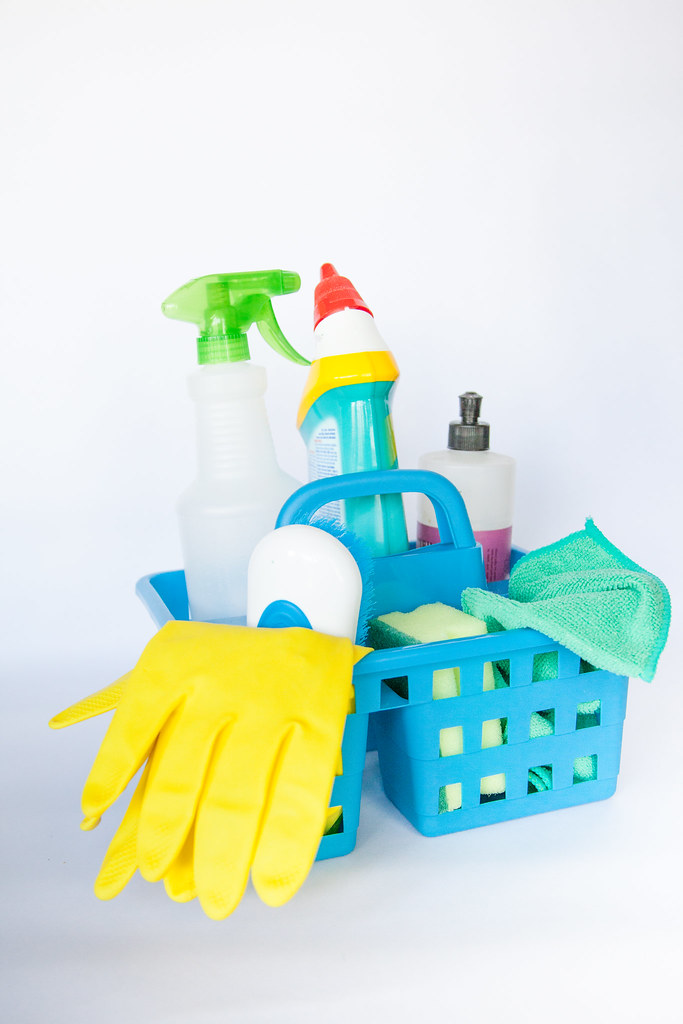
Many re-contamination mistakes come from simple habits: setting folded towels on the desk, tossing the remote onto a freshly made bed after using it to test the TV, or leaning your supply caddy onto a clean countertop because it is convenient. Convenience is helpful right up until it starts undoing your own work.
Common mistakes to skip
- Mixing products. If labels differ, keep them separate. More chemistry is not the same thing as better cleaning.
- Wiping without clearing clutter first. You cannot clean what you cannot reach.
- Using one cloth for the whole room. Once a cloth is dirty, it stops being a cleaning tool and starts becoming a delivery system.
- Forgetting the last-touch items. Handles, remotes, and switches are often missed because they do not look messy.
- Bringing fresh linens in too early. Keep clean items outside the workflow until the room is actually ready.
- Overcomplicating the process. A short checklist followed well beats an elaborate protocol nobody can execute consistently.
A practical room-ready checklist you can reuse
- Ventilate the room.
- Remove trash and used linens.
- Clear clutter and forgotten items.
- Clean top surfaces first, then mid-level touch points.
- Handle bathroom fixtures in a separate pass.
- Finish with the floor.
- Bring in fresh linens and reset guest amenities.
- Do a final walk-through and exit without re-touching cleaned surfaces.
The goal is not to make a room feel clinical. The goal is to make it feel cared for, predictable, and ready. That is what guests actually notice. If you need help tailoring room-prep communication to your stay, start with Contact or return to Eleonora Bed and Breakfast for the broader guest information flow.